Key Use Cases
Tools in Detail
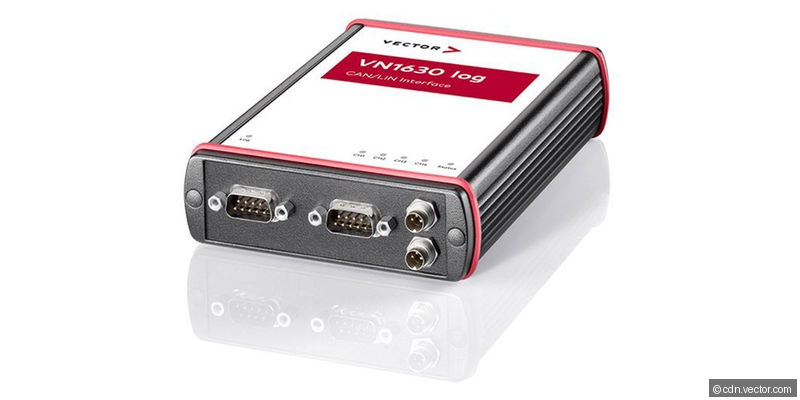
VN1630A
The workhorse of automotive network development - a compact USB interface providing 2 CAN/CAN FD channels. This is the most commonly encountered Vector hardware worldwide. Hardware-based timestamping with microsecond accuracy ensures precise time correlation. Supports CAN FD with data rates up to 5 Mbit/s and provides galvanic isolation to protect from automotive voltage transients. D-Sub 9 connectors follow standard CAN pinout (CAN_H pin 7, CAN_L pin 2).
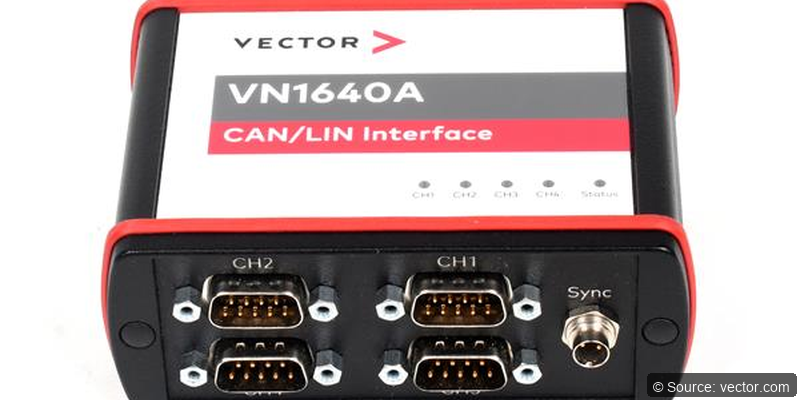
VN1640A
An expanded 4-channel CAN/CAN FD interface for multi-bus scenarios. Essential for testing gateway ECUs bridging multiple CAN networks or monitoring parallel bus segments. Each channel independently configurable for speed, termination, and protocol mode. Frequently used in integration setups requiring visibility into powertrain, chassis, body, and infotainment CAN simultaneously.
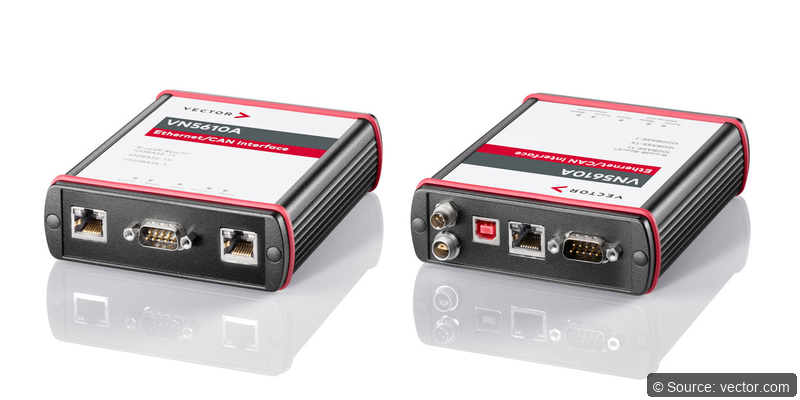
VN5610A
A dual-port Automotive Ethernet interface supporting 100BASE-T1 for BroadR-Reach automotive networks. Handles protocol conversion between standard IT Ethernet (100BASE-TX/RJ45) and automotive single-pair Ethernet (100BASE-T1). Enables full packet capture and injection for testing DoIP stacks, SOME/IP services, and TCP/IP-based diagnostics.
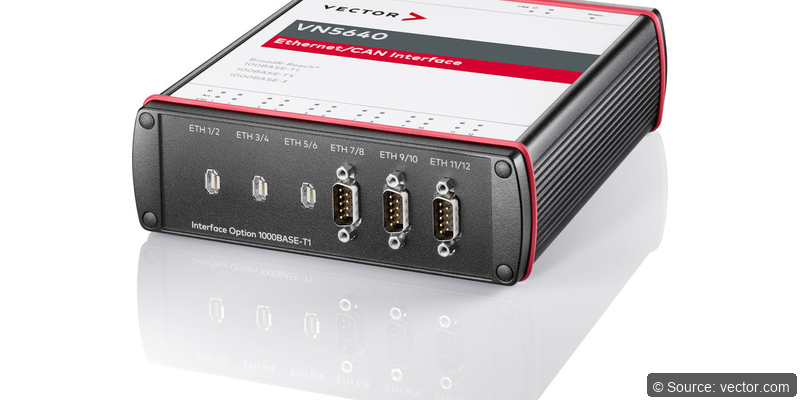
VN5640
High-performance 4-port Automotive Ethernet supporting 100BASE-T1 and 1000BASE-T1 (Gigabit). Includes integrated managed switch for monitoring, bridging, or active mode. Hardware-assisted nanosecond-precision timestamping for TSN testing and PTP validation. Essential for zone-oriented E/E architectures and central compute platforms.
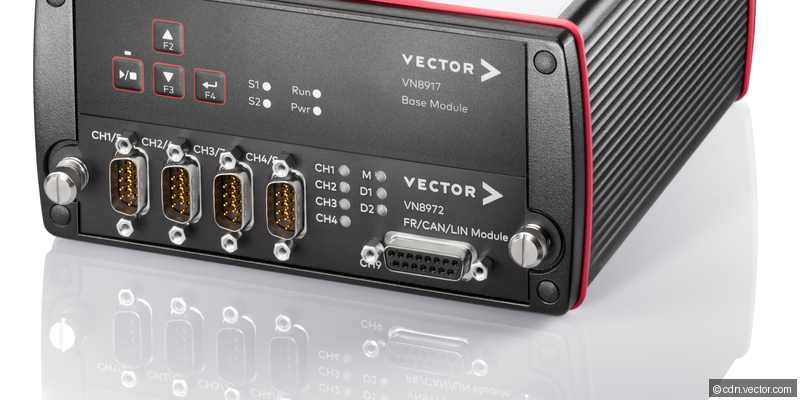
VN8900
Flagship modular network interface with plug-in piggyback boards for CAN, LIN, FlexRay, Ethernet, MOST, and I/O. Fully loaded systems provide 16+ CAN channels, multiple Ethernet ports, and analog I/O with hardware-synchronized timestamps. Ethernet-based PC connection supports remote operation ideal for HIL labs and test racks.
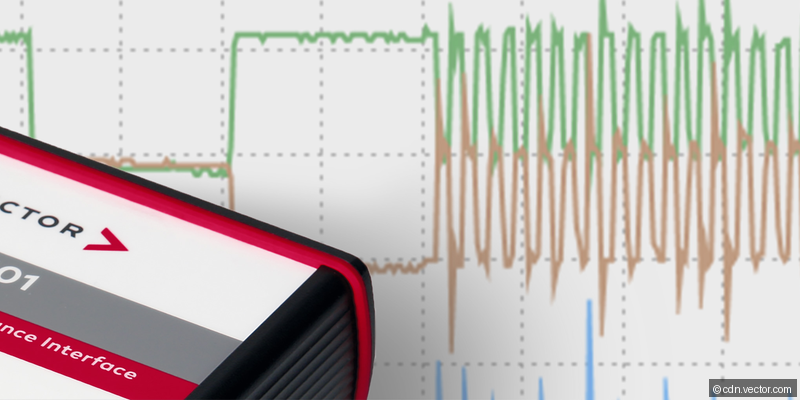
VH6501
Specialized LIN/K-Line interface with 2 channels for body electronics. Supports LIN 2.0/2.1/2.2 and legacy K-Line. Configurable master/slave mode and schedule table execution for simulating both master nodes (body controllers) and slave nodes (actuators/sensors).
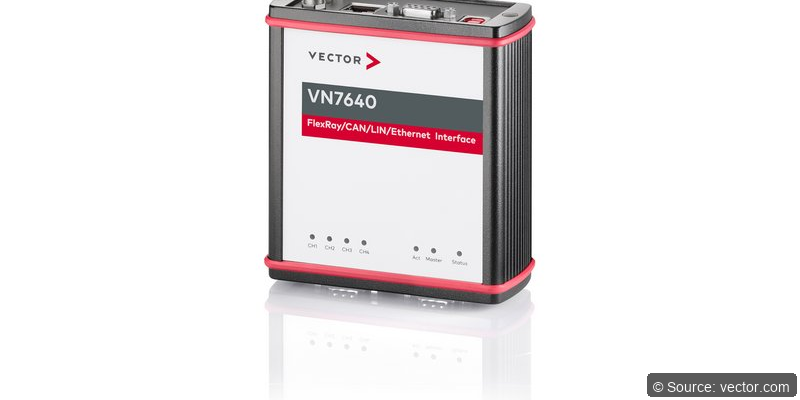
VN7640
Dedicated FlexRay interface with 2-4 channels for safety-critical communication. Supports both A and B channels for full redundancy testing. Hardware-based cycle synchronization and slot monitoring essential for debugging timing issues. Remains critical for supporting production FlexRay programs.
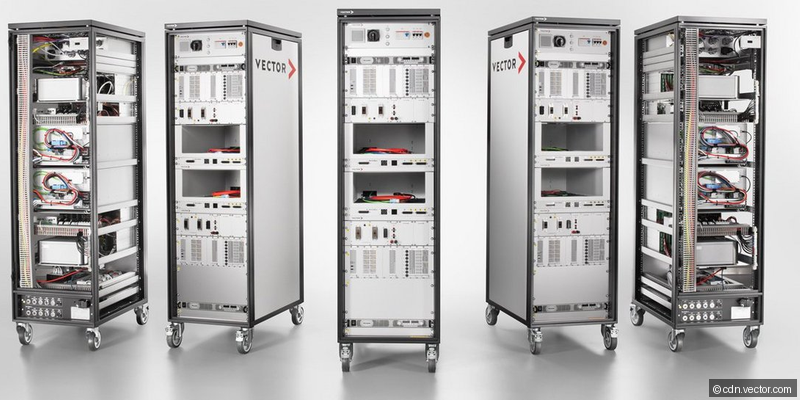
VT System
Modular I/O system for CANoe-based test environments providing analog voltage/current, digital I/O, PWM, resistor simulation for sensor inputs, and relay control. Enables complete ECU test benches within CANoe as a cost-effective alternative to full HIL systems.
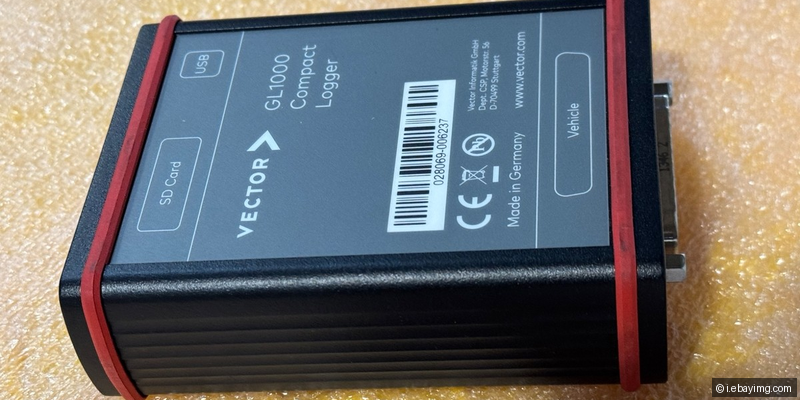
GL Logger
Standalone data loggers for autonomous vehicle recording. Ruggedized for in-vehicle installation, powered from 12V/24V, recording CAN/LIN/FlexRay/Ethernet with GPS-synchronized timestamps. Configurable triggers based on messages, signals, DTCs, or GPS geofencing. BLF files directly compatible with CANalyzer/CANoe.
Industry Context
Physical bus interfaces are the essential link between a software engineer's PC and the vehicle under development. Without these hardware devices, tools like CANoe and CANalyzer cannot communicate with real ECUs. Vector dominates this market because their hardware is deeply integrated into their software ecosystem - plug in a VN device, and CANoe automatically detects and configures it. The choice of hardware directly impacts test quality: channel count determines how many bus segments can be monitored, timestamp accuracy affects time-correlated analysis, and electrical isolation protects equipment from vehicle power transients.
Typical Workflow
Hardware selection follows the project's bus architecture. A basic development desk uses a VN1630A (2x CAN) for everyday debugging. Integration test benches add VN1640A devices for multi-bus coverage and a VN5610A for Ethernet. Vehicle test setups use GL loggers for autonomous recording. HIL labs deploy VN8900 platforms with custom channel configurations. All Vector hardware shares a common driver architecture (XL Driver Library) and auto-configures with Vector software tools, minimizing setup overhead when switching between configurations.
Selection Guide
Pro Tips
Always check your D-Sub 9 CAN pinout - the standard is CAN_H on pin 7, CAN_L on pin 2, but some OEMs use non-standard pinouts.
Enable hardware termination only when needed - double-termination on a short bench cable causes communication errors.
For multi-channel setups, ensure all interfaces share a common time base via the Vector hardware sync feature.
Configure GL loggers with ring-buffer mode and DTC-triggered recording to capture fault conditions without filling storage.
The XL Driver Library API allows custom applications to access Vector hardware from C/C++/Python, enabling integration with non-Vector test frameworks.